
My Experience in Creating a 'Safe' Workplace
Your Role in Cultivating Open Communication and Trust.

Hello friend! 👋
Basma here. Thank you for reading An Engineer's Echo. Your weekly publication of stories to equip you with the soft and hard skills to fast-track your growth in software engineering.
Reading Time: 4 mins.
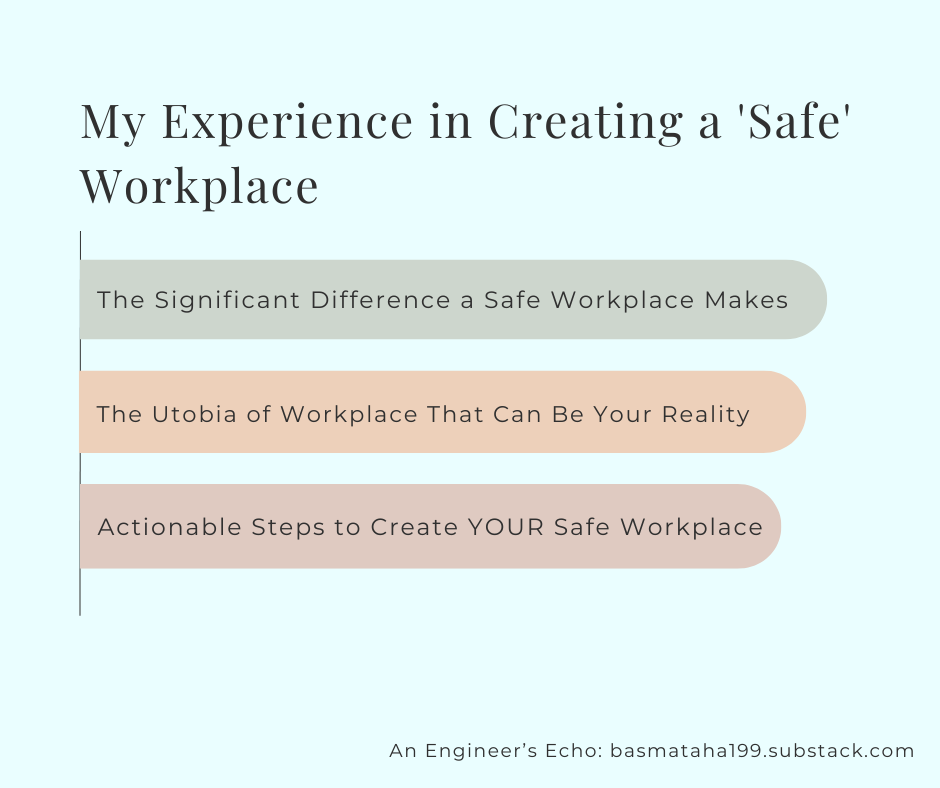
You can wait for your team members to create a safe workplace for you, or you can create one for yourself. There are things you can do to create a safer workplace for yourself and the people around you.
In this letter, we’ll discuss:
The Significant Difference a Safe Workplace Makes.
The Utopia of a Workplace That Can Be Your Reality.
Actionable Steps to Create YOUR Safe Workplace.
No Safe Workplace, No Easy Life
I remember the days when I dreaded going to work. Every morning felt like preparing for a battle, with constant stress and fear hanging over my head. This not only affected my performance but also took a toll on my mental health. A safe workplace can change everything. When you feel safe, you perform better, collaborate more effectively, and even enjoy your work.
A Safe Workplace Is Where There’s No Fear
Fear can be a huge barrier to productivity and creativity. In my early career, I was terrified of making mistakes or asking questions. I felt like any misstep would be the end of my career. But I learned that a truly safe workplace is one where mistakes are seen as learning opportunities, not failures. This mindset shift allowed me to grow and innovate without the constant fear of repercussions.
A Safe Workplace Is Where You Don’t Feel You’re Under a Microscope all the time.
One of my colleagues once described feeling like he was under constant surveillance, scrutinized for every minor mistake. This kind of environment is toxic and counterproductive. A safe workplace should be a place where you are trusted to do your job and where your managers focus on your growth rather than your every move. This trust nurtures independence and confidence and is essential for any software engineer's growth.
You Can Express Your Opinion Freely and Openly
Early in my career, I was hesitant to share my ideas, fearing they would be dismissed or ridiculed.
However, I learned that a safe workplace encourages open communication and values every voice. When I started working in an environment where my opinions were respected, my confidence soared, and my contributions became more significant. Encouraging open dialogue is crucial for innovation and team cohesion.
Don’t just wait for a good work environment—work on shifting your mindset and pushing yourself to contribute. Speak out, challenge with respect, and propose ideas publicly. It wasn't easy for me at first, but with conscious effort and practice, it became easier.
Imagine a World Where You Like Going to Work
Yes, this actually exists. I've had the privilege of working in such environments, and the difference is night and day.
When you look forward to going to work, your productivity increases, and so does your job satisfaction. It's not just about the tasks you do but the environment you do them in.
A supportive, safe workplace makes even the most challenging projects enjoyable.
Your Part in Creating a Safer Workplace for Yourself And Your Colleagues
Creating a safer workplace is a collective effort. Here’s what you can do:
Promote Open Communication:
Encourage your team to share their thoughts and ideas without fear of judgment. Be the person who listens actively and responds constructively.
Show Empathy and Support:
Recognize that everyone has bad days and struggles. Offer support to your colleagues and create an environment where they feel comfortable sharing their challenges.
Foster a Culture of Trust:
Trust your colleagues to do their jobs without micromanaging. When you trust others, they are more likely to trust you, creating a positive cycle of mutual respect.
Celebrate Mistakes as Learning Opportunities:
Instead of focusing on the negative, highlight what can be learned from mistakes. This approach reduces fear and encourages innovation.
Lead by Example:
Be the change you want to see. By demonstrating these behaviors, you set a standard for others to follow, gradually transforming the workplace culture.
Key Takeaways
A safe workplace is not just a nice-to-have; it's essential for productivity, creativity, and mental well-being.
In my experience, promoting open communication, showing empathy, fostering trust, celebrating learning from mistakes, and leading by example, are the fastest ways to create a safer workplace for yourself and your colleagues.
Remember, it starts with you.
Share with us your experience in the best ways to create a safe workplace!
Thank you for reading! I hope you enjoyed it, let me know by hitting the like button ❤️ to help others find it on Substack, and share it to spread the love!
Hidden Gems I Loved Reading:
Missed the Promotion? Here's How to Use It as a Stepping Stone. by
This article by offers a practical and positive approach to handling the disappointment of missing a promotion.When To Say No To Best Practices by
This article, written by , challenges the notion of blindly following best practices in software engineering by sharing a real-life example where adhering strictly to best practices led to inefficiencies.- . This article by demystifies the concept of networking, transforming it from a dreaded task into a valuable career strategy.
Questions to Ask Your Next Manager by
. This article by provides practical, specific questions to help evaluate potential managers and workplace environments, ensuring a better fit and avoiding future regrets.
That’s all folks!
Speak soon :)
— Basma
Glad to have you back, thank you for the mention :-).
Thanks for the mention, and I'm glad to see you back, Basma!
Some safe workplaces speak for themselves. It's difficult to hide micromanagement and the overall sentiment of management people. But, as you explained, creating one doesn't originate from a company memo or someone instructing you to do it, but from wanting to do it and showing others how they can do it too (leading by example).